How to Preserve Family Recipes and Their Stories
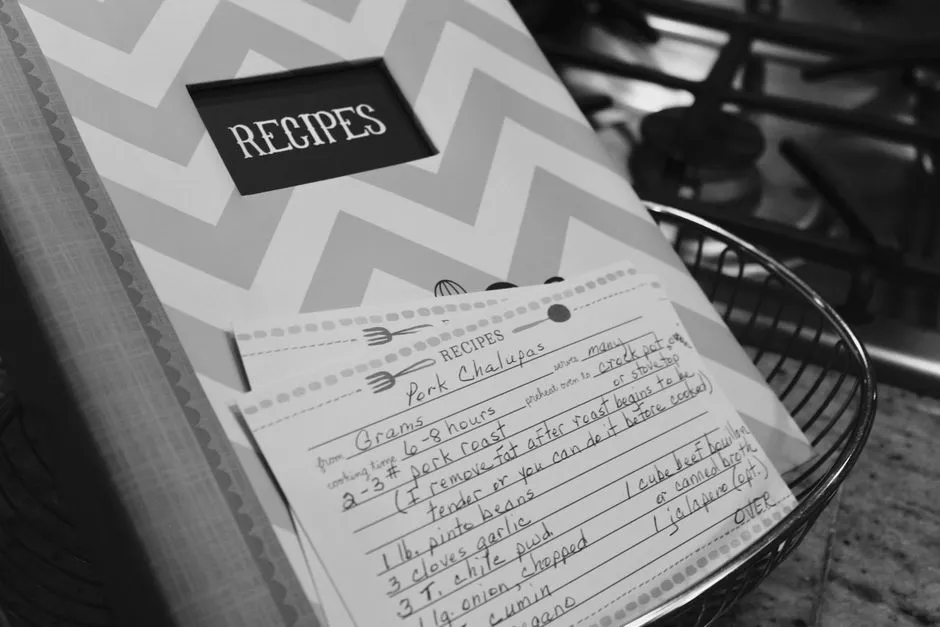
Preserve the paper, the method, and the memory separately
To preserve family recipes, scan or photograph the original document, transcribe it without silently correcting it, and record who used it, where it came from, and when it was served. For an unwritten recipe, observe the cook making it and capture quantities, sensory cues, sequence, and equipment. Keep the archival copy distinct from any tested, edited version.
That separation protects both kinds of truth: what the source actually says and what a modern cook needs to reproduce the dish.
Begin with an inventory
Gather recipe cards, notebooks, clippings, annotated cookbooks, and loose notes in a clean, dry work area. Give each item a simple identifier, such as a person's name plus a sequence number. Record writing on the back, attached notes, stains, folds, and the source of any clipping.
Do not discard duplicates too quickly. A second copy may contain a changed quantity, a different title, or handwriting that reveals who used it. Ask relatives what they recognize before reorganizing the collection beyond recognition.
For fragile, valuable, moldy, or badly damaged material, pause and seek advice from a qualified conservator. Avoid home repairs that add adhesive, heat, or irreversible coatings.
Make a faithful digital copy
Scan flat items when they can be handled safely; photograph bound or delicate pages that should not be forced flat. Capture both sides and include the full edges. Check every image for focus before returning the item to storage.
Use descriptive file names and keep more than one copy in separate locations. A folder might contain the image, a plain-text transcription, a story note, and a tested cooking version under the same identifier.
Transcribe spelling, abbreviations, and ambiguous marks as they appear. Put uncertainty in brackets or a note rather than guessing. The archive should show later readers where interpretation began.
Record an unwritten recipe while it is cooked
Ask permission before recording audio, video, or photographs. Let the cook work in their familiar way while you note:
- ingredient packages, sizes, and starting amounts;
- what a “handful,” “glass,” or “until right” looks like;
- order of operations and resting points;
- pan dimensions and heat source;
- visual, aromatic, sound, and texture cues;
- what the cook changes for weather, season, or crowd size;
- the dish's name in the cook's own language and spelling.
Weighing or measuring can happen alongside the cook if it does not disrupt the method. Another option is to weigh a container before and after an ingredient is added. Label any reconstructed quantity as an estimate until the recipe is tested.
Test without rewriting history
Cook from the transcription when the original method is safe to reproduce. Note missing steps, unclear quantities, and assumptions. If you adjust an oven setting, ingredient, or technique, record the change in a separate tested version with a date.
Do not modernize a recipe silently. An old instruction may reflect different equipment or ingredient conventions. Preserve it as evidence, then explain the tested adaptation. Where historical food-safety practice conflicts with current guidance, follow current safety guidance and state that the method changed.
Add the story with consent
Ask open questions: Who taught you? When was this served? What did the original kitchen look like? Which detail would relatives recognize immediately? Record the speaker's name and the date, and let them decide whether sensitive information can be shared.
A recipe story does not need a dramatic origin. “Made after school because the ingredients were always in the cupboard” is useful context. Avoid presenting family memory as verified public history when dates or events are uncertain.
For a practical example of turning an ordinary leftover into a written method, see breadcrumbs from stale bread.
Explore more documentation approaches in Recipe Keeping.
Build an archive people can use
Store clean originals in stable sleeves or folders made for document preservation, away from food, dampness, heat, and direct light. Use a working copy in the kitchen. Share the digital collection with family members who have permission, and include a simple index.
The most valuable archive is not the most polished one. It is the one that distinguishes original evidence, remembered context, and tested instruction so another person can understand what they are holding.